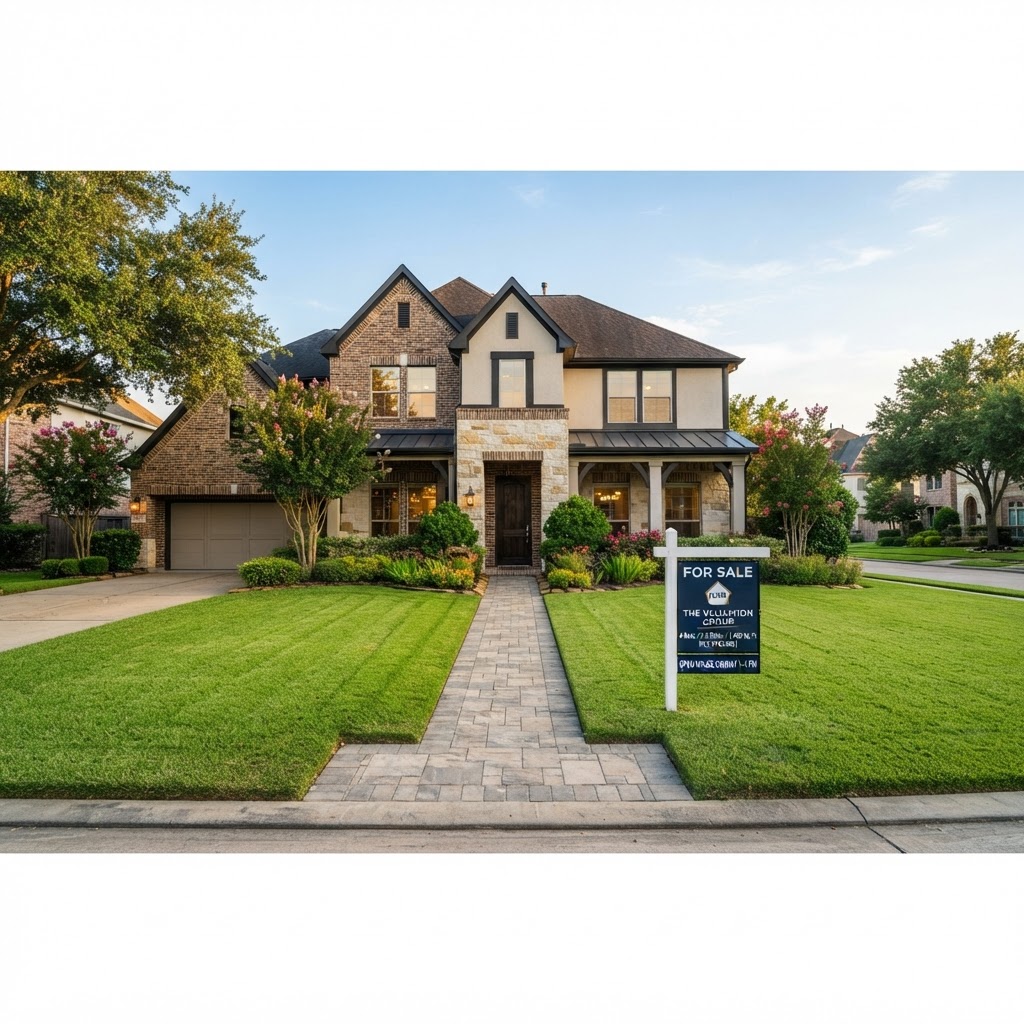
The 2026 Houston Seller's Protocol: Transitioning from AVMs to Infrastructure-Linked Equity Audits
In the luxury Houston residential market, the era of relying on static, three month old CMA data is over. As institutional capital accelerates its focus on micro market infrastructure, the traditional 'Zestimate' or automated valuation model (AVM) has become a liability for sellers seeking to maximize exit proceeds.
At Chambers Properties Group, we have formalized a transition to Infrastructure-Linked Equity Audits. This is a forward looking methodology designed to isolate the hidden valuation premiums driven by Houston's evolving landscape. When developing a pricing strategy in a cooling market, relying on historical data alone is no longer sufficient.
Rethinking Value in High-Demand Enclaves
For property owners in premium Houston sectors like West University, The Heights, and proximity zones to the Texas Medical Center, historical square footage metrics no longer capture true market potential. Value is now defined by the 'development delta', which is the correlation between municipal capital expenditures and residential desirability.
While algorithms look backward at closed sales, our audit projects how specific infrastructure shifts, such as the I-10 corridor upgrades, will compress future inventory and fundamentally alter your land’s utility over the coming 36 months. Understanding these shifts is central to our Houston’s Infrastructure Pulse: 2026 Real Estate Impact Report.
Municipal infrastructure projects are currently the primary drivers of localized appreciation in the Houston luxury market.
The Three-Pillar Predictive Audit
Our advisory team bypasses generic data aggregation by utilizing a proprietary three pillar predictive model to determine your property's future state value:
- Land-Use Velocity: We monitor zoning momentum and parcel density potential that standard algorithms ignore. This identifies if your footprint holds latent value for high density utilization or premium infill development.
- Migration Density Mapping: By analyzing the movement of high earning households into nearby job hubs, we calculate the sustainability of the future buyer pool for your specific micro market.
- Diminishing Improvement Thresholds: We assess your capital improvements against current submarket curves to determine the exact point where additional investment ceases to drive profit. This is essential for owners following a guide to ROI-driven renovations to prevent over capitalization before an exit.
Strategic Positioning for 2026
Sophisticated institutional investors have historically utilized predictive modeling to capture alpha in real estate. It is time for private luxury sellers to apply this same rigor. Whether you are finalizing a Q4 2026 exit strategy or executing a Q3 2026 seller's playbook, data backed foresight is your most potent competitive advantage.
As buyers increasingly prioritize ESG compliance, your property's standing within the infrastructure grid becomes its most valuable attribute. By moving from reactive pricing to active equity management, you ensure that you capture the full upside of your asset. Contact the Chambers Properties Group advisory team to schedule your Infrastructure-Linked Equity Audit.
In a market defined by rapid infrastructure evolution, looking at yesterday's sales to price tomorrow's exit is a recipe for leaving equity on the table.
Capturing the 'Development Delta' requires a transition from historical data to predictive infrastructure audits.
***
Nick Chambers
Broker Associate, Chambers Properties Group
The Chambers Review