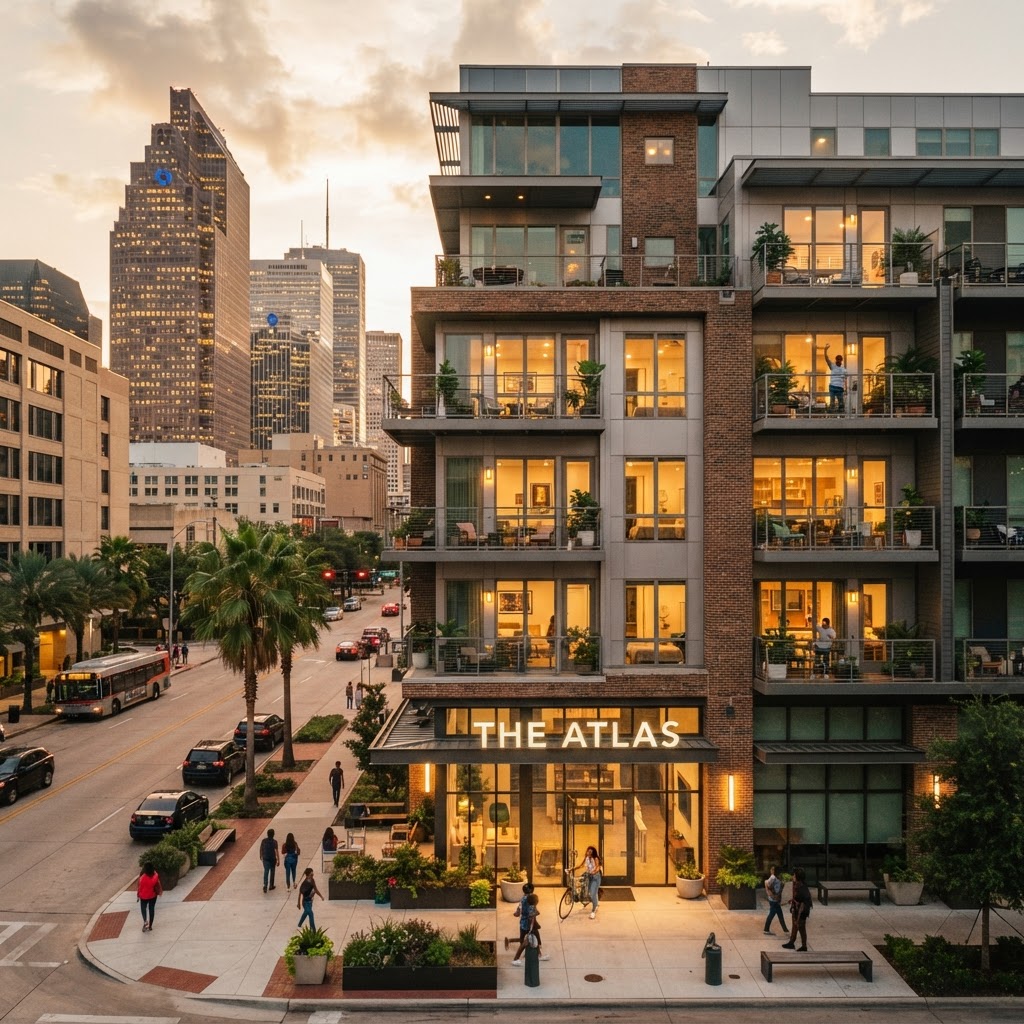
As Houston matures into a polycentric metropolis, the traditional office sector faces a structural evolution that has unlocked a hidden layer of value for institutional-grade investors. Rather than viewing the ongoing office vacancy rates in B and C-class buildings as a localized failure, sophisticated capital allocators are identifying these assets as the foundational substrate for a new era of urban density and Houston Portfolio Hedging: A 2026 Strategy for Market Resilience.
By 2026, the transition from stagnant office corridors to high-density residential micro-flats has become the primary mechanism for revitalizing Houston’s inner-loop neighborhoods. This strategy is a sophisticated form of The Houston Yield Arbitrage: Capitalizing on B-Class Multifamily Assets in 2026. It bypasses the supply constraints of new construction by leveraging existing mechanical cores and concrete skeletons, offering a faster path to cash-flow in a high-interest-rate environment.
To grasp the economic mechanics of these conversions, one must first understand that this is not merely a pivot. It is a fundamental restructuring of Houston’s urban fabric. The traditional commute, once the lifeblood of Westchase and the Energy Corridor, has been replaced by a demand for proximity-based living.
Young professionals, driven by the desire for hyper-local 'work-live-play' ecosystems, are signaling a permanent shift in housing preference. This trend is mirrored in the Strategic Downsize: A Houston Guide to Optimal Relocation in 2026. For the savvy investor, this shift represents an opportunity to acquire assets at a fraction of their replacement cost.
While single-family inventory in Houston continues to face pressure, with median prices steady at $385,000, the residential rental market for attainably priced units remains drastically underserved. Converting obsolete floor plates into micro-apartments isn't just a trend. It is the most efficient way to capture the current demand for downtown-adjacent housing through The Synthetic Asset Class: Why Institutional Investors Are Pivoting to Houston’s Hybrid Build-to-Rent Communities.
Retrofitting 1980s-era office skeletons provides a structural shortcut to meeting modern residential demand.
The most successful developers are looking past the aesthetic limitations of 1980s-era office parks. They are focusing on structural feasibility. This involves identifying buildings with optimal column spacing and central ventilation shafts that can be repurposed to satisfy current residential building codes without a complete demolition.
While 'no-zoning' in Houston offers a regulatory advantage, it requires investors to be hyper-diligent regarding deed restrictions and utility easements.
Investors who understand the intersection of parking requirements and density incentives, as detailed in Houston’s Infrastructure Pulse: 2026 Real Estate Impact Report, are currently seeing yield compression in their favor. These repurposed properties command premiums over traditional office leases.
We are also seeing a massive migration of capital away from peripheral suburban office parks toward dense residential pockets in Montrose, The Heights, and Midtown. These neighborhoods offer built-in infrastructure that developers of new greenfield projects struggle to replicate.