The New Geometry of Houston Residential Assets
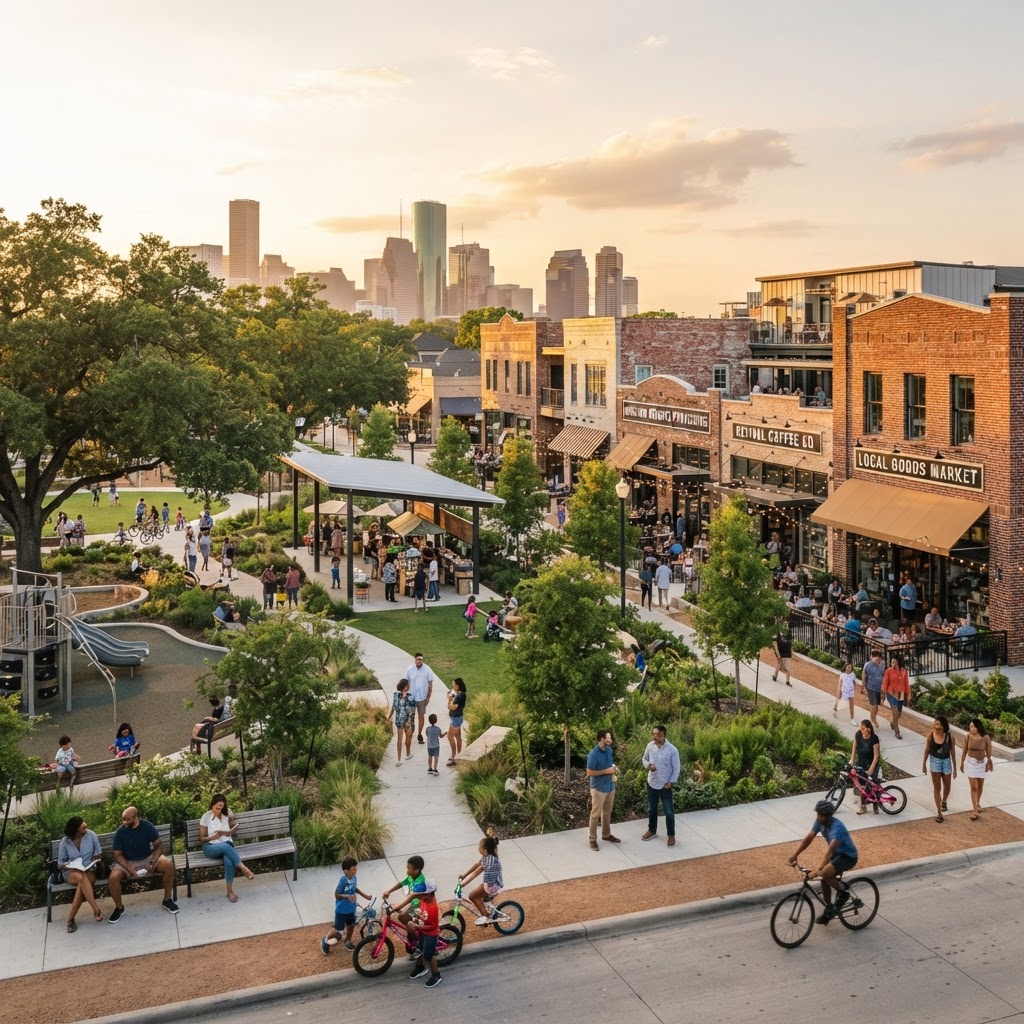
The traditional 7,000 square foot lot is undergoing a fundamental transformation. Investors are no longer viewing these footprints as static ground for single-family homes but as dynamic infrastructure platforms. By leveraging current municipal frameworks that encourage moderate density, developers are creating high-value assets that integrate seamlessly into Houston’s Inner Loop expansion: top neighborhoods for 2026 such as the Heights or Montrose.
Precision Density MovementA development strategy focused on maximizing the utility and housing capacity of urban land through vertical massing and structural efficiency rather than outward sprawl.
This approach prioritizes structural efficiency over sprawl, utilizing vertical massing techniques that respect surrounding skyline heights while doubling or tripling housing capacity. It is an essential component of the Houston’s Inner Loop 2026: the rise of walkable micro-markets that are currently redefining the city's core.
Key TakeawaySuccessful 2026 development requires shifting from a "legacy footprint" mindset to viewing land as a high-yield infrastructure platform capable of supporting multi-unit configurations.
Rethinking 'Missing Middle' Infrastructure
The 'Missing Middle' in 2026 is defined by its architectural adaptability. We are seeing a shift away from conventional townhome blocks toward duplex and triplex configurations that offer the privacy of single-family living with the economic benefits of multi-family density.
7,000 sq ftStandard Lot Footprint
2x to 3x CapacityTarget Density
Structural EfficiencyDevelopment Focus
This creates a resilient asset class capable of weathering market volatility by providing diverse housing options for the job-dense corridors driving Houston’s economy. By optimizing the land-to-improvement ratio, investors can secure stable yields while capturing the walkability dividend: why Houston’s transit-adjacent neighborhoods are outperforming conventional sprawl in 2026. Professionals are increasingly seeking these specific types of proximity to transit and urban hubs.