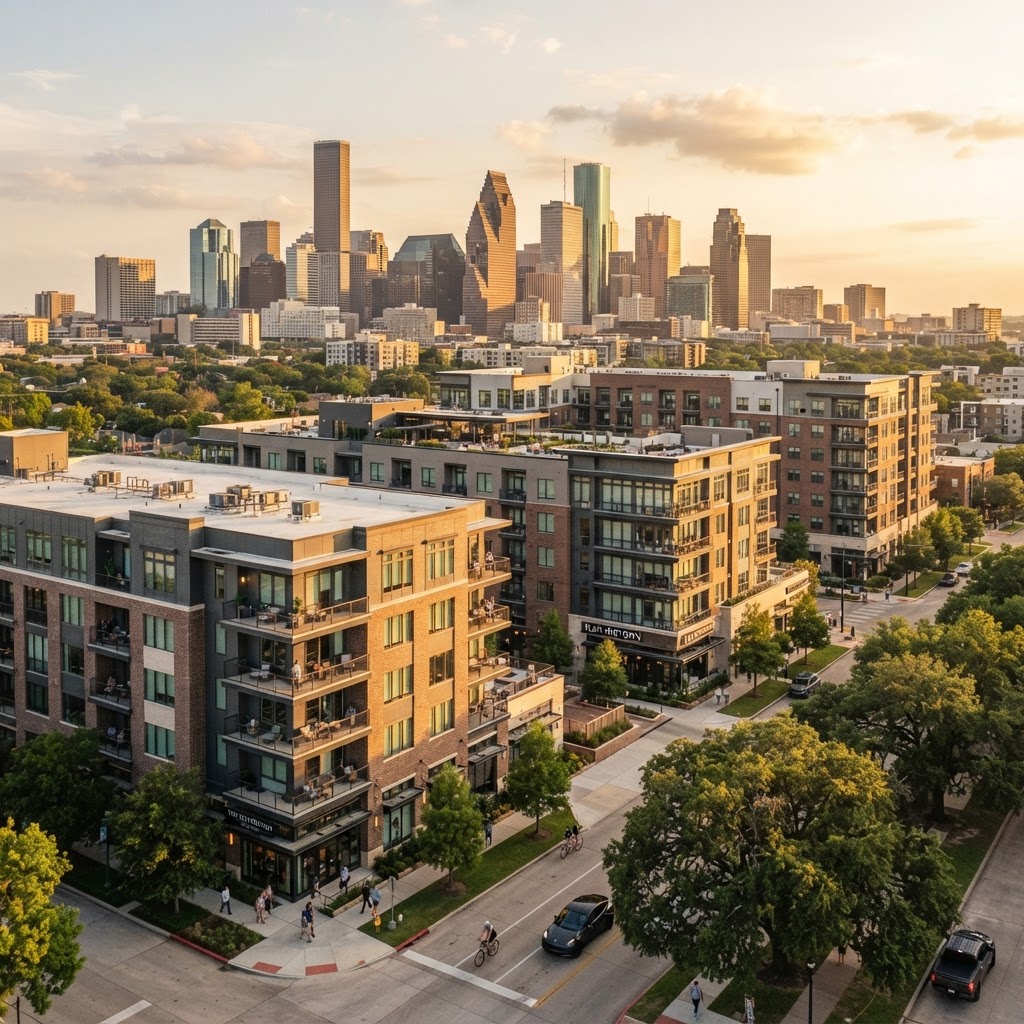
The Houston skyline is a testament to resilience, a vertical monument to an economy that has spent the last decade decoupling itself from the volatile boom bust cycles of traditional energy. As we navigate the complexities of 2026, the Greater Houston market stands at a critical inflection point. For the sophisticated investor, the era of passive appreciation is behind us; the era of strategic portfolio hedging has arrived.
For the sophisticated investor, the era of passive appreciation is behind us; the era of strategic portfolio hedging has arrived. — Nick Chambers
Houston remains a singular anomaly in the national real estate landscape. While coastal markets have grappled with extreme valuation compression, the Bayou City’s fundamental economic drivers, an explosive growth in the Texas Medical Center, the continued expansion of the aerospace sector in the Clear Lake corridor, and a diversified energy tech landscape, have created a uniquely stable floor for property values. As of Q1 2026, the median home price in Houston has stabilized at $385,000, with inventory levels holding firm at a balanced 3.8 months.
For portfolio managers, the goal for 2026 is not merely growth, but structural resilience. We are seeing a deliberate migration of institutional and private capital toward assets that can withstand interest rate sensitivity while capitalizing on the region’s relentless population influx. Whether you are managing holdings in West University Place or diversifying into Memorial, the strategies outlined here are designed to protect your equity and maximize your Net Operating Income (NOI) in a tightening capital environment. Explore Houston neighborhoods to see how specific sub markets are currently performing against these benchmarks.
The Macro Economic Hedge: Why Houston Outperforms
The Greater Houston area acts as a natural hedge against national volatility due to its economic breadth. Unlike one industry towns, Houston’s GDP is anchored by a trifecta of global leadership: healthcare, energy transition, and logistics. In 2026, this diversification is our greatest asset. When interest rates create friction in residential markets, the stability of the Texas Medical Center’s permanent employee base provides a consistent floor for rental demand in surrounding areas like The Heights and Montrose.Furthermore, the Houston Advantage is bolstered by a favorable tax structure and a business friendly regulatory environment that continues to attract corporate relocations. As of middle of 2026, the average days on market for premium residential properties remains at 42 days, signaling that even with higher borrowing costs, liquidity remains healthy for high quality assets. Investors who understand the interplay between these macro sectors are currently pivoting toward assets that benefit from corporate migration. By aligning your portfolio with areas that support The Resilient Corridor, you mitigate the risk of localized economic shocks. For a deep dive into the nuances of these economic drivers, See Houston investor FAQs.