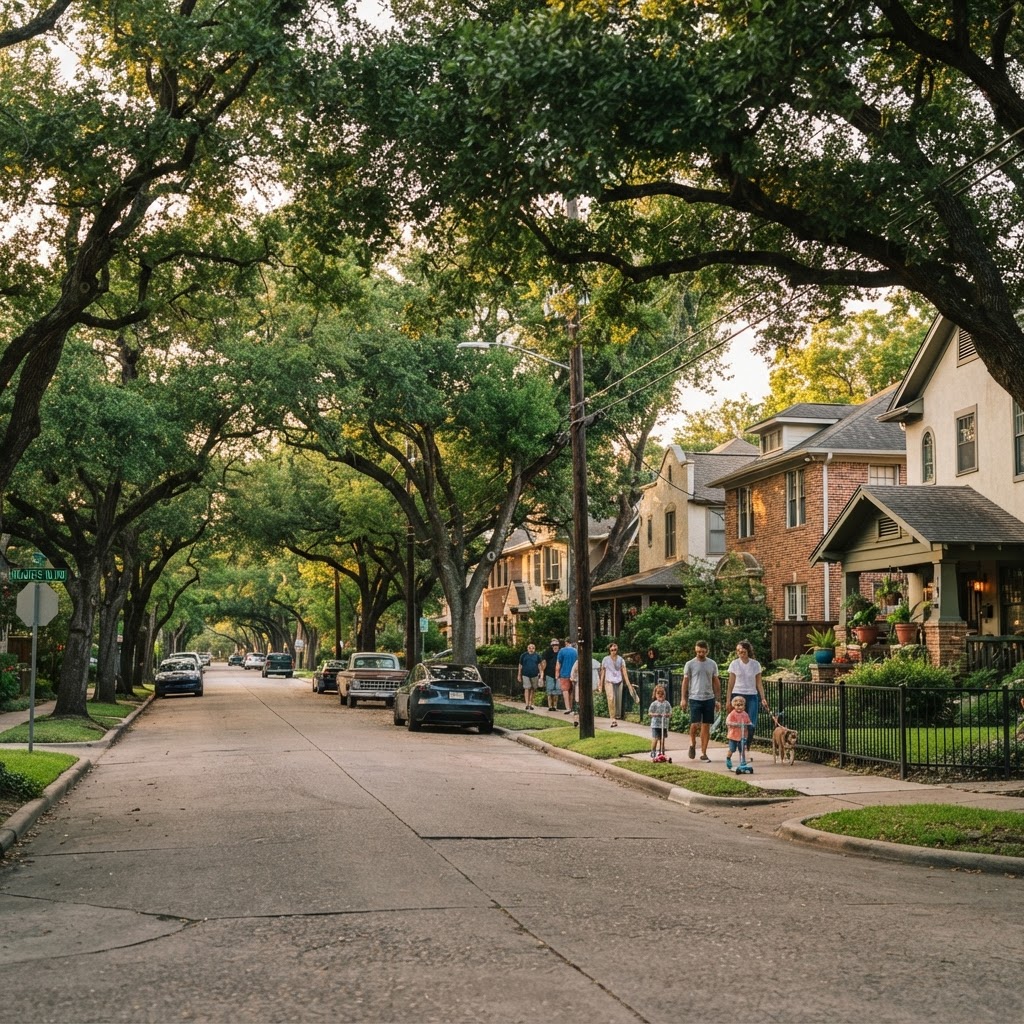
In the global commercial real estate landscape, Houston stands as a singular anomaly. To the uninitiated, our city’s lack of traditional municipal zoning is often mistaken for a 'wild west' environment, a land where development hurdles are nonexistent.
However, for the seasoned institutional buyer, the reality is far more nuanced. While we lack a city-wide zoning map, we operate within a complex web of land-use regulations, private deed restrictions, and stringent drainage requirements that can turn a 'shovel-ready' acquisition into a multi-year entitlement nightmare.
As we move through 2026, the Houston market remains a beacon of opportunity, yet capital efficiency depends entirely on your ability to navigate these regulatory layers. Those buying property in Houston: The 2026 Value-Add Acquisition Guide must understand that the margin for error is razor-thin.
Institutional investors who fail to account for the interplay between municipal codes and localized private restrictions will quickly find their internal rates of return (IRR) eroded by unforeseen entitlement friction. For those navigating this terrain, the mission is simple: decouple the myth of 'no zoning' from the reality of development risk.
Whether you are eyeing high-density plays in The Heights or speculative land banking in the Memorial corridor, success in 2026 requires a rigorous, data-backed approach to due diligence. Beyond municipal codes, we invite you to Start your Houston commercial search to see active listings, or Explore Houston neighborhoods to understand the micro-market dynamics of our city.
The Houston Regulatory Landscape: Decoding 'Non-Zoning'
The absence of traditional zoning does not mean the absence of regulation. Houston manages land use through a decentralized framework that relies heavily on Chapter 42 of the City of Houston Code of Ordinances.
For the institutional buyer, this shift in focus, from 'zoning' to 'subdivision and site design', is the single most important adjustment to make. Instead of a zoning map, developers must contend with minimum lot sizes, building lines, and parking requirements that vary wildly by sector.
For example, commercial projects in West University Place are subject to incredibly stringent private deed restrictions and specific municipal ordinances that essentially act as zoning. Meanwhile, in districts like Montrose, the lack of restrictive covenants has allowed for a mosaic of land use, creating high-density mixed-use opportunities, but also higher risk regarding adjacent land-use compatibility and infrastructure capacity.
High-density development in Houston requires navigating a complex web of subdivision codes and localized infrastructure requirements.
Data from the first half of 2026 indicates that inventory levels for entitled, pad-ready sites have tightened significantly. This scarcity is driving developers toward 'brownfield' or 'under-improved' assets where the entitlement risk is higher. When you evaluate a site, you are looking at how the site’s current layout adheres to Houston’s Infrastructure Pulse: 2026 Real Estate Impact Report.
If your project exceeds the existing drainage capacity of the street, a common issue in the River Oaks periphery, the cost of infrastructure upgrades can easily exceed the value of the raw land acquisition. Success often requires mastering Houston’s Off-Market Market: A 2026 Buyer Strategy to find sites with grandfathered capacity.