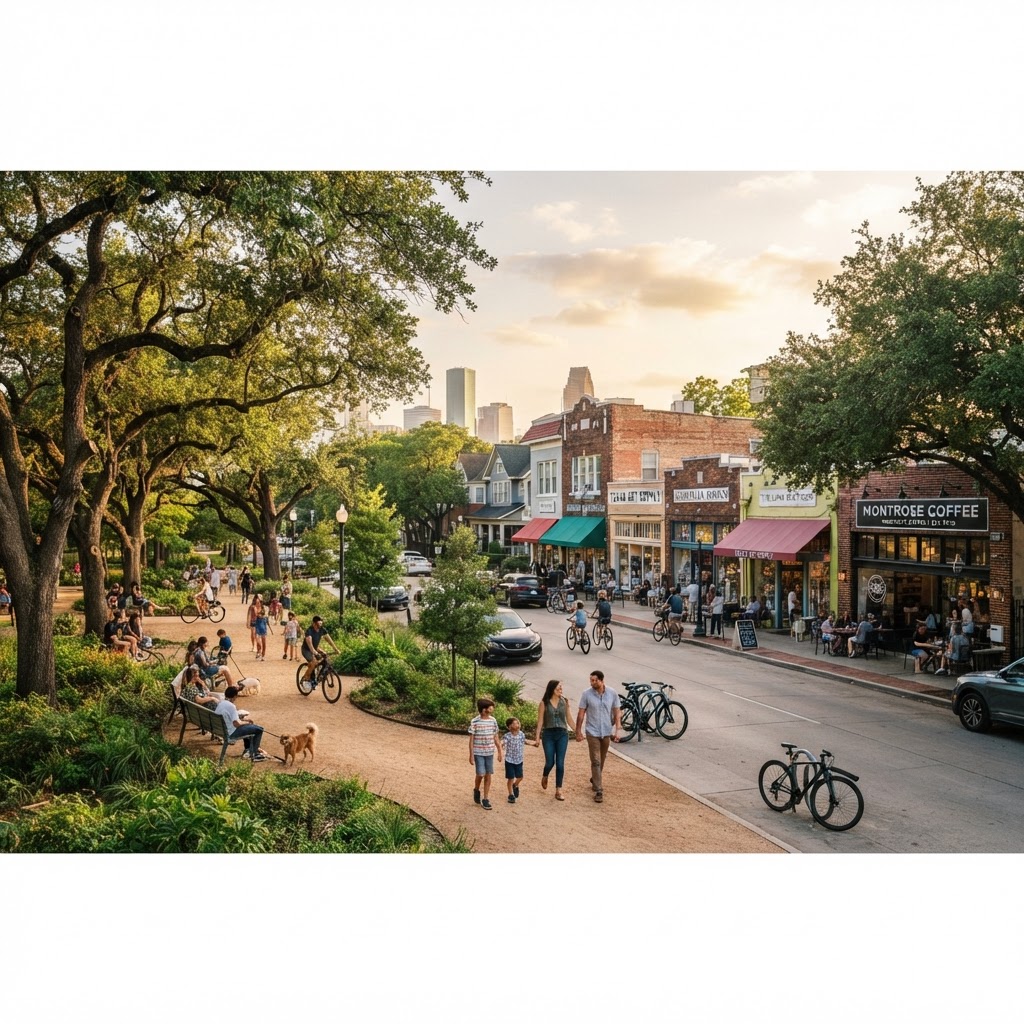
Houston is a city that constantly reinvents its own skyline, but few neighborhoods capture the shifting spirit of the Bayou City quite like Montrose. From the sun-drenched canopy of live oaks lining its residential streets to the vibrant pulse of its culinary corridors, Montrose remains the definitive cultural heart of Houston. While the broader real estate market across the state experiences seasonal fluctuations, this inner-loop enclave continues to command attention from those who value character, convenience, and a sense of belonging that is rarely found in traditional suburban developments.
As we move through 2026, the intersection of history and modern ambition has never been more pronounced in this district. Whether you are a creative entrepreneur seeking inspiration from the local art scene or a professional looking for a lifestyle that prioritizes walkability over a long commute, Montrose offers a unique value proposition. Understanding how this neighborhood fits into the wider tapestry of Houston, which includes established enclaves like River Oaks and the historic charm of The Heights, requires a nuanced look at data, geography, and the lifestyle shifts currently shaping our city.
The Evolution of Montrose: From Bohemian Enclave to Premier Inner-Loop Hotspot
The historical trajectory of Montrose is a testament to the resilience of Houston culture. Originally developed in the early twentieth century as a streetcar suburb, the neighborhood spent decades as a sanctuary for artists, intellectuals, and musicians. Today, that legacy lives on in the architecture and the inclusive spirit of the community, even as the area has matured into one of the most sought-after residential destinations in the region. The transition from a counter-culture hub to a sophisticated, high-demand district has been organic rather than forced.
Property owners in Montrose today are often those who recognize the intangible value of proximity to the Museum District and the central business hubs. Unlike the sprawling developments in the outskirts, Montrose has retained its human scale. The neighborhood is currently seeing a refined stabilization where the bohemian roots are now complemented by upscale amenities, high-end boutiques, and some of the city's most respected restaurants. This evolution is not about erasing the past but about building a sustainable future where diverse housing types can coexist. Investors and residents alike are drawn to this stability. You can Explore Houston neighborhoods to see how Montrose benchmarks against neighboring districts.
Architectural Variety: Navigating Modern Infill vs. Historic Restorations
One of the most compelling aspects of the Montrose housing market is the sheer diversity of its residential inventory. Potential buyers are often forced to choose between the aesthetic charm of a restored 1920s bungalow and the low maintenance requirements of a modern luxury townhome. Both paths come with their own distinct considerations. The historic bungalows offer a level of craftsmanship and character that is virtually impossible to replicate, featuring original hardwood floors, deep porches, and unique period details. However, these properties require a commitment to ongoing stewardship and potential system modernizations.
Conversely, the rise of modern luxury infill projects has transformed the streetscapes of neighborhoods like Hyde Park and Cherryhurst. These newer builds provide energy efficiency, open floor plans, and state of the art amenities that align with the expectations of the 2026 professional. We often see buyers comparing these options to new construction in areas like West University Place or Bellaire, but Montrose offers a more eclectic variety. When evaluating these options, it is critical to understand the specific zoning and deed restrictions that may apply. Whether you are leaning toward a historic restoration or a turn-key modern build, Start your home search to view the latest listings.
Lifestyle and Walkability: The True Value of Living Near Westheimer
Lifestyle is the primary driver for the current Montrose migration. When we discuss walkability in Houston, the conversation almost always centers on Westheimer and Lower Westheimer. In a city built for the automobile, Montrose stands out as an exception. Residents here can feasibly live, work, and recreate without constant reliance on their vehicles. This creates a quality of life that is difficult to quantify but immediately felt. The proximity to world-class dining, eclectic art galleries, and neighborhood coffee shops fosters a community that is deeply connected to its surroundings.
Comparing this to the more suburban environments found in Memorial or the outer loops, the difference is stark. In Montrose, the sidewalk is a social space. The community programming, from local farmers markets to outdoor concerts, reinforces the idea that this is a neighborhood designed for people, not just for transit. As infrastructure continues to improve, the walkability index for this area is projected to climb even higher. This lifestyle is a major contributor to the sustained demand for housing here, as young professionals and creative entrepreneurs continue to prioritize time and experience over square footage.
Strategic Investment Outlook: Why Montrose Remains a Top-Tier Asset
In 2026, the real estate market in Montrose is characterized by resilience and scarcity. With median prices currently hovering around 875,000 dollars for detached single-family homes, the market has seen a steady appreciation that mirrors the broader Houston inner-loop stability. We are seeing days on market average approximately 35 to 45 days, a clear indicator of sustained interest in a market that remains supply-constrained. Because land availability in the core is limited, the competitive nature of this market acts as a natural buffer against volatility.
Compared to peripheral suburbs where inventory levels can fluctuate rapidly, Montrose offers a more predictable long-term investment horizon. The neighborhood is effectively built out, meaning the risk of massive new developments overwhelming the local supply is low. For the savvy investor, this means that property value is anchored by the land itself rather than just the improvement on it. Even when the city experiences broader economic shifts, areas like Montrose maintain their status as premium, defensive assets. The combination of high demand, limited inventory, and a central location creates a floor for property values that is higher than most other areas in the city.
Navigating the 2026 Montrose Market: Expert Tips for Buyers
The Montrose market is not for the faint of heart, but with the right strategy, it is entirely navigable. Success in this environment requires a proactive approach rather than a passive one. In a market where inventory is tight, many of the best opportunities never even reach the public Multiple Listing Service. This is where local brokerage expertise becomes your most valuable asset. Leveraging relationships to identify off-market gems is often the difference between finding your dream home and settling for a property that does not quite fit your needs.
When navigating competitive bidding scenarios, it is important to be prepared before you even start your search. This means having your financing clearly outlined and understanding the nuances of the local zoning ordinances. We often advise clients to look beyond the immediate appearance of a home and consider the structural integrity and long-term potential of the lot. Do not be discouraged by the intensity of the competition. By working with a professional who understands the granular shifts in the neighborhood, you can gain a significant advantage. If you are ready to get serious about your next move, Book a strategy call to discuss the current market pulse.
Community Integration and Future Infrastructure
The future of Montrose looks exceptionally bright as we look toward 2027 and beyond. The ongoing commitment to beautification projects and transit-oriented development is making the neighborhood even more accessible to families and professionals. Recent city initiatives have focused on improving the connectivity of bike lanes and pedestrian pathways, which directly correlates to an increase in residential desirability. Furthermore, the local business community remains highly active in ensuring that the neighborhood retains its unique character while embracing sustainable growth.
As the city continues to focus on density in the inner-loop, the community-led initiatives in Montrose are setting a benchmark for other neighborhoods to follow. From historical preservation societies to modern community centers, there is a collective effort to maintain the identity that makes this place so special. For those looking to put down roots, this long-term vision offers peace of mind. You are not just buying a house in a neighborhood; you are investing in a community that is actively managing its own growth. The balance between maintaining history and welcoming modern infrastructure is a delicate one, but Montrose is succeeding in that balancing act with grace.
Listen on the Go
The Chambers Review Podcast
This week: The Resurgence of Adaptive Reuse: Transforming Houston’s Aging Industrial Corridors into High-End Residential Enclaves
As Houston’s inner-loop land values reach historic highs, developers and sophisticated investors are pivoting from demolition to design,...
Listen to the Latest EpisodeExplore Houston Neighborhoods
For those interested in how Montrose compares to other areas of the city, or if you are considering a move from a district like The Heights or River Oaks, we provide comprehensive resources to guide your decision. Our goal is to ensure you have the data and the local insight required to make a confident, informed real estate decision.
Ready to talk strategy? Book your free consultation or get your instant home valuation.
Find your perfect neighborhood
By Nick Chambers, Broker Associate, Nick Chambers, Broker Associate, Realty Of America (ROA) · Realty of America