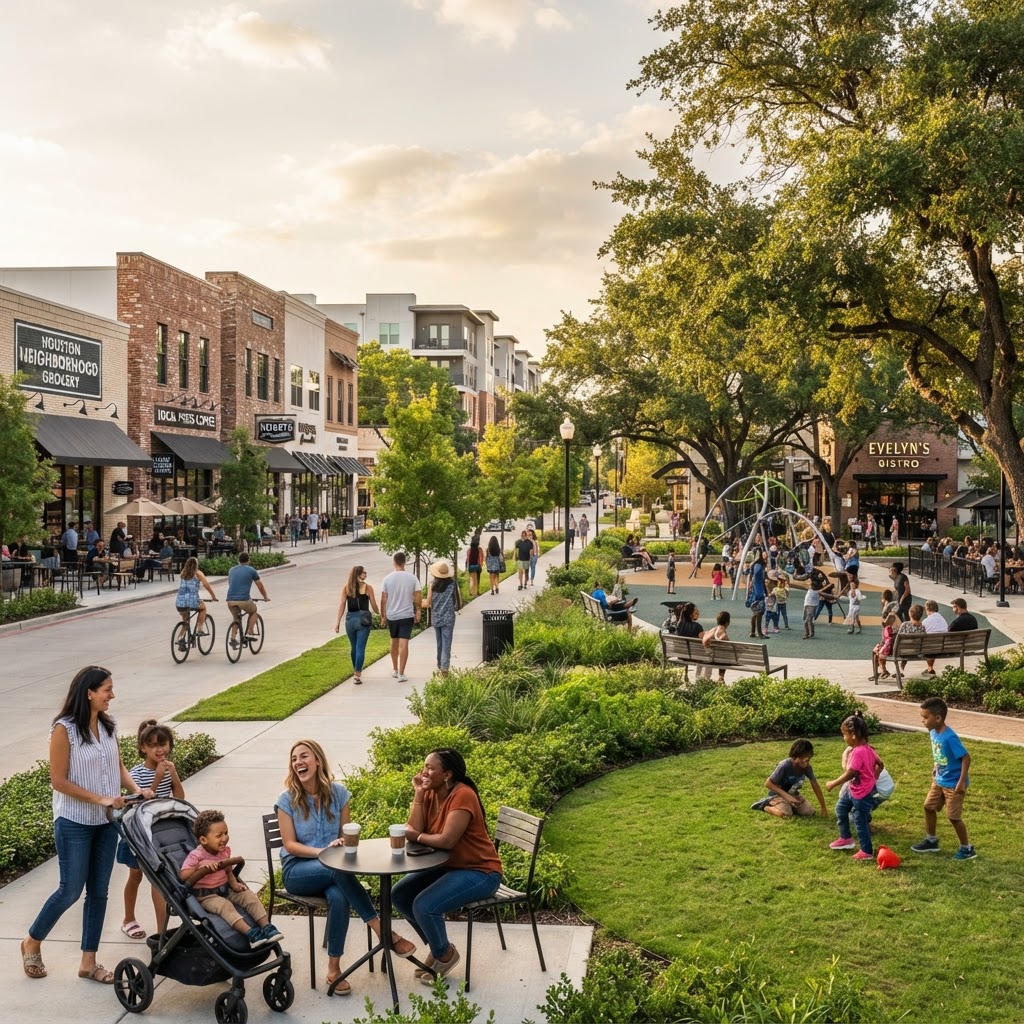
The skyline of Houston is undergoing a profound transformation that goes far beyond the glass towers of downtown. As we move through 2026, the traditional markers of a prime real estate investment have shifted. What was once defined solely by proximity to the central business district is now being redefined by digital connectivity, lifestyle infrastructure, and a sophisticated approach to regional mobility. For the discerning investor or the relocating executive, understanding these shifts is not merely an advantage, it is a necessity for long term capital preservation and growth.
Houston remains a unique anomaly among major American cities. Unlike coastal markets hampered by geographical constraints, our city continues to expand with deliberate intent. The strategic development of outer loop districts and the revitalization of historic inner loop enclaves are creating a multi-polar economy. Whether you are looking at the traditional prestige of River Oaks or the emerging potential of corridors further afield, the current market environment rewards those who look past the surface level aesthetics and analyze the underlying mechanics of supply, demand, and urban evolution.
The Evolution of Perimeter Growth
The narrative of Houston growth has long been characterized by the expansion of its peripheral belts. As of 2026, we are witnessing the stabilization of major infrastructure projects that have significantly altered the accessibility of regions once considered too remote for the high net worth professional. The completion of the latest segments of the Grand Parkway and the accompanying residential and commercial hubs have turned thirty minute commutes into mere fifteen minute drives, effectively expanding the reach of the luxury market.
This evolution is not simply about physical distance. It is about the quality of the ecosystem being built around these thoroughfares. We are seeing a shift toward mixed use developments that prioritize high end retail, health facilities, and proximity to regional tech campuses. For investors, this represents a shift in the risk profile of outer loop properties. In 2026, the median sales price in these expanding corridors has reached $685,000, reflecting a 12 percent increase over the previous 24 month period. Days on market for turnkey luxury inventory in these zones now averages 34 days, indicating a sustained velocity that defies typical cooling cycles. As you Explore Houston neighborhoods, notice how infrastructure is the primary catalyst for this shift in valuation.
Data Driven Value Metrics
In the current climate, data serves as our most reliable compass. When we analyze the appreciation trends across established markets like West University Place and Bellaire, we observe a consistent premium driven by school district performance and land value. In these areas, the median price for a single family home currently hovers around $1,350,000. The scarcity of buildable land in these municipalities keeps inventory levels incredibly tight, often below 2.5 months of supply, which protects the downside even during broader economic fluctuations.
Conversely, neighborhoods such as The Heights and Montrose are experiencing a different type of appreciation. Here, the value is tied to density, walkability, and the preservation of character within a modern urban context. Property tax stability remains a primary concern for many of my clients, and we find that municipal tax rates in these pockets remain competitive when compared to the high growth tax districts on the far periphery. It is essential to look at the price per square foot across these sectors to determine where the true value lies. While Memorial continues to command top tier prices due to its proximity to the Energy Corridor, secondary markets are showing higher year over year appreciation rates, often exceeding 8 percent in pockets where institutional capital is currently flowing into luxury residential development.
Lifestyle and Infrastructure Integration
The modern Houston professional no longer chooses a neighborhood solely based on the residence itself. The integration of the METRORail system and the expansion of secondary transit lines have fundamentally changed the desirability of neighborhoods that provide a seamless transition between professional obligations and personal leisure. Proximity to transit hubs is now a top three requirement for my relocation clients. This is not because they rely on public transport for daily commuting, but because these nodes act as anchors for high quality amenities, including boutique wellness centers, specialty grocers, and fine dining.
The 2026 landscape highlights the importance of the tech hub influence. Areas that offer direct arterial access to medical and energy technology campuses are seeing a surge in demand for executive housing. In these zones, we are tracking inventory levels that remain persistently low, particularly for properties built within the last five years. By focusing on areas where urban planners have successfully integrated these lifestyle components, investors are effectively future proofing their assets. The trend toward live, work, and play environments is no longer a marketing buzzword. It is a fundamental economic requirement that dictates which neighborhoods maintain long term occupancy and value appreciation. You can Start your home search by focusing on these high integration corridors to ensure your investment aligns with current demographic shifts.
Identifying Micro Markets
Beyond the widely recognized names, Houston contains several hidden gems that are currently attracting the attention of astute investors. These micro markets are often characterized by a pivot in zoning or a resurgence of interest from local developers who are rehabilitating historic residential blocks while maintaining the charm that makes these areas unique. I frequently advise clients to look for neighborhoods where the gap between entry level and luxury home prices is beginning to compress. This compression is often a leading indicator of gentrification and sustained interest from institutional residential funds.
One such area is the corridor bordering the historic sectors of the inner loop, where small lot ordinances have enabled a new wave of high density luxury construction. In these pockets, we are seeing average days on market drop to 28 days for premium homes. The key is to identify neighborhoods that possess the physical bones for growth, such as proximity to major parks, bayou trails, or institutional anchors like major hospitals and university campuses. When you see a consistent pattern of high end renovation permits being issued in an area where the median price is still relatively suppressed, you have identified a micro market with significant upside potential. These are the areas where the appreciation spread against the rest of the city is most pronounced.
Future Proofing Your Real Estate Investment
As we look toward 2030, the primary challenge for the Houston investor is balancing neighborhood character with the reality of urban sprawl and zoning shifts. Houston is famous for its lack of formal zoning, which provides immense flexibility but also requires a rigorous due diligence process when evaluating the potential of adjacent lots. To protect your investment, I emphasize the importance of understanding deed restrictions and the long term development plans for the surrounding blocks. This is particularly relevant in areas where land values are escalating rapidly and commercial pressure is mounting against quiet residential streets.
Investment success in this decade depends on a defensive strategy. This means prioritizing properties with high historical value retention, such as those within the established boundaries of River Oaks or near the major cultural hubs of the city. However, for those seeking growth, the focus should be on neighborhoods that have established neighborhood associations and active community planning councils. These entities act as a bulwark against disorganized growth and help to maintain the integrity of the neighborhood over time. By aligning your investment with areas that have strong social capital and active governance, you mitigate the risks associated with the rapid, sometimes unpredictable, expansion of the Houston footprint. Professional guidance is critical here to navigate these nuances. Book a strategy call to discuss how your specific portfolio goals align with these long term regional projections.
Exclusive Broker Insights
In my practice at Realty of America, I have observed that the most successful investors are those who view Houston not as a single market, but as a collection of dozens of distinct, micro economic hubs. The criteria for selection in 2026 has become increasingly granular. Beyond the basic metrics of price and square footage, I encourage my clients to evaluate the connectivity index of a neighborhood, its resilience against flooding and environmental factors, and the depth of the rental market for potential exit strategies.
Furthermore, I have noticed that the most lucrative opportunities are found by analyzing the pipeline of capital improvement projects. Whether it is a new park initiative, a road widening project, or the approval of a significant commercial development nearby, these projects signal the next wave of neighborhood desirability. My advisory approach is built on this foundation of proactive analysis. We do not just look at what is currently on the market. We evaluate the trajectory of the neighborhood to ensure that your purchase today is a foundational asset for your future. Whether you are a professional relocating to Houston for a career move or an investor looking to diversify into Texas real estate, the strategy remains the same. You must lead with information and act with precision in a market that moves as quickly as ours.
Ready to talk strategy? Book your free consultation or get your instant home valuation.
Listen on the Go
The Chambers Review Podcast
This week: The Resurgence of Adaptive Reuse: Transforming Houston’s Aging Industrial Corridors into High-End Residential Enclaves
As Houston’s inner-loop land values reach historic highs, developers and sophisticated investors are pivoting from demolition to design,...
Listen to the Latest EpisodeExplore Houston Neighborhoods
Find your perfect neighborhood
By Nick Chambers, Broker Associate, Nick Chambers, Broker Associate, Realty Of America (ROA) · Realty of America