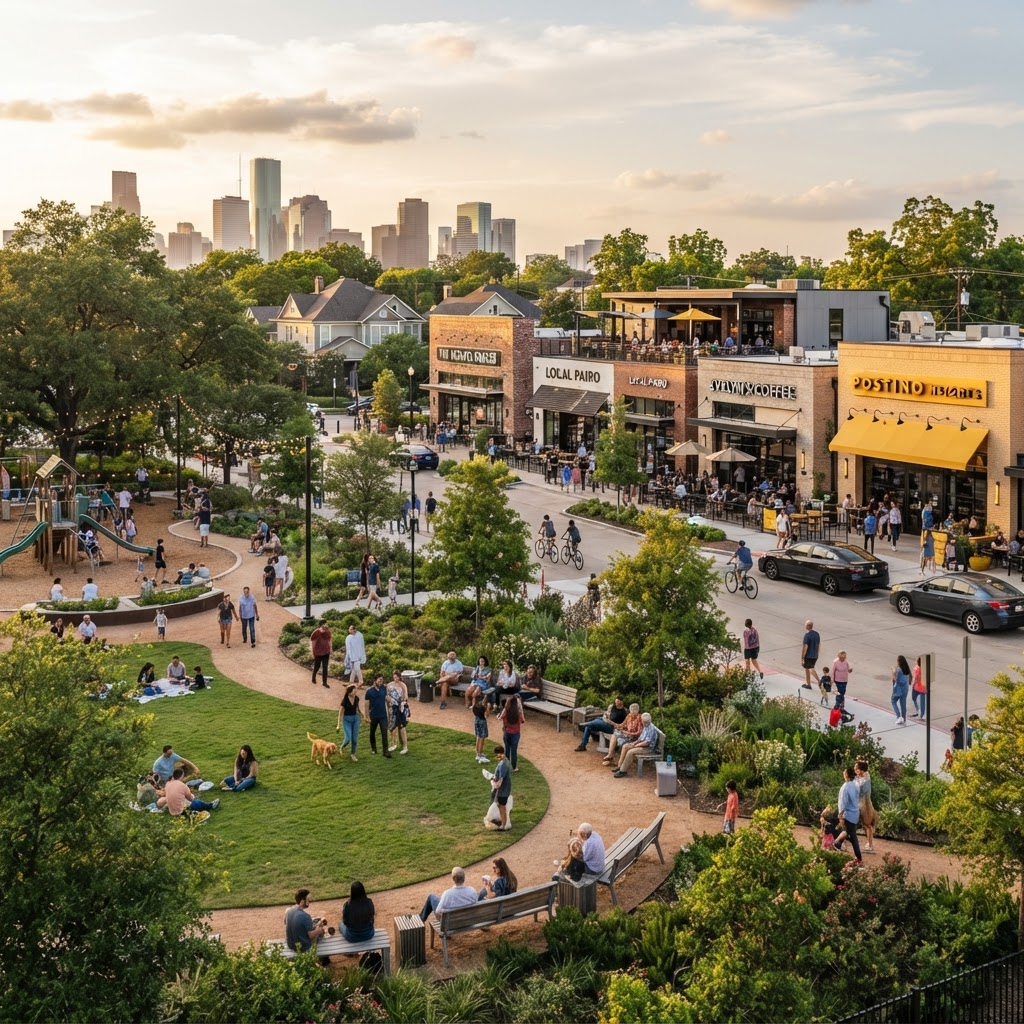
Houston has long been defined by its sprawling geography, yet in 2026, the city is experiencing a profound shift where the traditional metrics of real estate appreciation are being rewritten by the plate. Access to world-class dining is no longer a peripheral amenity for luxury homebuyers. It has become the primary anchor for neighborhood identity and a reliable lead indicator for property value growth. As we analyze the residential landscape, we find that the most resilient assets are situated within a ten minute walk of James Beard recognized concepts, artisan bakeries, and chef-driven social hubs.
The correlation between culinary prestige and residential demand is stronger than ever. Homebuyers are moving away from the isolated luxury of gated enclaves and toward connected, walkable corridors that offer a cosmopolitan lifestyle. At Chambers Properties Group, we have observed that neighborhoods embracing a sophisticated food culture consistently outperform the broader market in terms of price stability and inventory velocity. This transition represents a fundamental change in how Houstonians view their homes, moving from a focus on interior square footage to a focus on the experiential quality of the immediate environment.
The Gastronomy-Appreciation Correlation
The link between a neighborhood’s dining scene and its real estate performance is rooted in the concept of social infrastructure. High-end restaurants and specialty cafes act as catalysts for foot traffic and community cohesion. When a renowned chef selects a location for their newest venture, they are effectively conducting a rigorous demographic analysis of the area. Savvy real estate investors view these restaurant openings as early-warning signals that institutional capital and demographic shifts are following close behind.
In 2026, we see a distinct premium placed on homes located in zones with high culinary density. For instance, areas adjacent to newly revitalized culinary corridors have seen year-over-year appreciation rates that are 4.2 percent higher than the city average. The data suggests that buyers are willing to pay a premium for walkability to high-quality food establishments, often absorbing higher price points per square foot to secure that lifestyle. When evaluating potential acquisitions, we analyze the concentration of independently owned businesses rather than chain establishments, as the former indicates a deep-rooted, sustainable cultural vibrancy that guards against the boom and bust cycles of larger commercial real estate trends.
Investors should pay close attention to neighborhoods where restaurant turnover is low and where local permits for new exterior dining spaces are on the rise. This indicates a commitment to the long-term aesthetic and functional evolution of the streetscape. By identifying these neighborhoods before the broader market recognizes the shift, investors can secure assets that provide both personal utility and significant long-term appreciation potential. Start your home search to see which neighborhoods currently lead in these metrics.
Heights and Washington Avenue Evolution
The Heights has transformed from a quiet historic enclave into a powerhouse of culinary innovation. The area has successfully navigated the challenge of integrating modern luxury townhomes with historic bungalows, creating a diverse housing stock that appeals to a wide demographic. In 2026, the median sales price in The Heights stands at $745,000, with an average of 34 days on market. This high velocity indicates a persistent demand for quality inventory, particularly for properties that feature modern design elements without sacrificing the architectural character that defines the district.
Washington Avenue has evolved in lockstep with The Heights, shedding its reputation as a purely nightlife-centric corridor to become a destination for sophisticated, chef-driven dining. This shift has placed immense pressure on the surrounding residential streets. The competitive landscape for luxury townhomes in this pocket is fierce, as young professionals and affluent families prioritize proximity to the high-density dining options of the corridor. We have noted that properties within three blocks of the major restaurant hubs in this area have an inventory level of just 1.8 months, reflecting a severe supply constraint that continues to exert upward pressure on valuations.
For those looking to enter this market, the key is balancing the need for walkability with the preservation of quiet, tree-lined residential characteristics. Properties that sit at the intersection of these two needs, the quiet residential block with immediate access to the bustling commercial corridors, are the crown jewels of the portfolio. We encourage clients to Explore Houston neighborhoods to better understand which specific streets in The Heights maintain this essential balance.
The East End Renaissance
The East End represents the most compelling narrative of industrial adaptive reuse in the Houston market. Historically defined by its proximity to the port and rail lines, the neighborhood is now being reimagined as a hub for artisanal food production and experimental dining. This transformation is not merely aesthetic, it is structural. The conversion of old warehouses into collective kitchens, craft breweries, and small-batch roasteries has created a unique residential draw that is attracting a wave of creative-class buyers.
From an investment standpoint, the East End offers a lower entry point compared to the more established corridors like West University Place or River Oaks. The median sales price currently hovers around $485,000, making it an attractive proposition for those seeking high long-term yields. While the area is still in the early stages of its renaissance, the rapid pace of development suggests that the window of opportunity for early-entry pricing is narrowing. The infrastructure investment in the rail line and the expansion of the trail systems further support the thesis that this neighborhood will continue to gain value as it becomes better integrated into the urban core.
Savvy investors are pivoting to the East End because they recognize that the artisanal food culture is a precursor to a wider influx of service-oriented businesses. As the population density increases, the demand for local grocery options and high-end services will follow, further solidifying the neighborhood’s residential viability. We advise our clients to monitor the zoning and redevelopment of industrial plots, as these spaces often become the next major culinary anchors that redefine the street value for the coming decade.
Montrose and Midtown Culinary Density
Montrose remains the heartbeat of Houston’s culinary landscape. With the highest concentration of James Beard recognized establishments in the city, the neighborhood possesses a level of cultural capital that is virtually impossible to replicate. This culinary density acts as a buffer against broader market fluctuations. Even in periods of economic contraction, the properties in Montrose hold their value with remarkable tenacity because the lifestyle they offer is a finite resource.
In Midtown, the integration of high-density residential developments with refined dining options has created a vertical living environment that is highly sought after. The median price for luxury condos in this sector is approximately $525,000, with 42 days on market on average. The synergy between the urban design and the culinary scene in Midtown attracts a resident who values time and efficiency, preferring to be steps away from a curated dinner rather than navigating the commute.
We view the stability of Montrose and Midtown as the anchor of a diverse real estate portfolio. While these areas may not see the exponential growth percentages of emerging districts like the East End, they provide the essential security of established, high-demand real estate. For the affluent buyer, these neighborhoods offer a lifestyle that is synonymous with the Houston urban experience. To discuss how these stable assets fit into your overall strategy, Book a strategy call with our advisory team.
Suburban Foodie Hubs
The paradigm that suburban living is synonymous with chain restaurants and limited variety is firmly in the past. In 2026, master-planned communities across the Houston region are aggressively competing to host 'culinary villages', purpose-built retail spaces that house independent restaurants, specialty grocers, and community event centers. These developments are specifically designed to attract affluent families who are seeking the space of the suburbs without sacrificing the urban-style access to diverse cuisine.
Areas surrounding Memorial and the outer reaches of Bellaire are seeing significant investment in these culinary hubs. Developers have realized that by curating the commercial tenants, they can significantly increase the residential property values within the community. These suburban foodie hubs have become central gathering points, replacing the traditional country club model with a more inclusive and modern social experience. For families, the appeal is clear: the ability to walk to a top-tier breakfast spot or a quality dinner destination while maintaining access to highly rated school districts is a powerful draw.
Data indicates that homes located within master-planned communities featuring these culinary amenities command a 6 to 8 percent premium over comparable properties in communities lacking such infrastructure. This shift confirms that the 'foodie' mindset has successfully migrated from the inner city to the suburban periphery, fundamentally altering the long-term desirability and valuation of master-planned developments.
Investing in Taste: Strategic Advice
Identifying a neighborhood with 'culinary momentum' requires a shift in how one approaches real estate analysis. We advise our clients to look beyond the current price per square foot and instead focus on the quality of the commercial leases in the area. A neighborhood that supports local, independent, and high-concept dining is a neighborhood that possesses the essential ingredients for long-term appreciation. These businesses require a customer base with disposable income and a cultural appreciation for the arts and dining, which serves as a proxy for neighborhood stability.
When evaluating a potential investment, consider the following three markers of culinary momentum:
- The presence of diverse, independent, and multi-cuisine dining options within a five-minute walk.
- Consistent investment in the public realm, such as streetscaping, lighting, and safe pedestrian pathways connecting the residential core to the culinary nodes.
- The presence of 'third-place' spaces, including independent coffee shops or wine bars that serve as communal living rooms for the local residents.
Ready to talk strategy? Book your free consultation or get your instant home valuation.
Listen on the Go
The Chambers Review Podcast
This week: The Resurgence of Adaptive Reuse: Transforming Houston’s Aging Industrial Corridors into High-End Residential Enclaves
As Houston’s inner-loop land values reach historic highs, developers and sophisticated investors are pivoting from demolition to design,...
Listen to the Latest EpisodeExplore Houston Neighborhoods
Find your perfect neighborhood
By Nick Chambers, Broker Associate, Chambers Properties Group · Realty of America