
Under editorial review. This page is kept for the record and is not shown in the library, and its claims are not presented as current guidance until a person reviews them.

Houston Real Estate Wealth: 2026 Macroeconomic Outlook
The Chambers Review
Market Intelligence

Houston Real Estate Wealth: 2026 Macroeconomic Outlook

Analyze the macro drivers shaping the Houston property market in 2026, providing strategic foresight for investors navigating the transition of the local economy.

August 12, 20267 min read

The silhouette of the Houston skyline, once defined primarily by the monolithic glass spires of the energy sector, is now a testament to a broader, more resilient economic base. As we navigate the midpoint of the decade, the Greater Houston Area remains a focal point for high-net-worth investors seeking a hedge against volatility. While national media outlets often generalize the state of the U.S. housing market, Houston operates on a unique frequency, one driven by industrial diversification, a surging population, and a logistical infrastructure that is arguably the most robust in the Southern United States.

Houston operates on a unique frequency, one driven by industrial diversification, a surging population, and a logistical infrastructure that is arguably the most robust in the Southern United States. — Nick Chambers

As we look toward the horizon of 2026, the macro-environment presents a complex tapestry of opportunities and structural shifts. Investors who have historically relied on rapid capital appreciation must now pivot toward a more sophisticated strategy of yield management and value-add positioning. Whether you are holding multi-family assets in the inner loop or luxury single-family portfolios across the Memorial corridor, understanding the intersection of Fed policy, regional infrastructure, and local demographic trends is no longer optional. It is the fundamental requirement for wealth preservation.

The Fed Policy Pivot and Capitalization Rates

By late 2026, the Federal Reserve’s monetary policy is expected to reach a state of equilibrium, shifting away from the high-interest-rate environment that characterized the previous two years. For the Houston real estate investor, this pivot represents a critical juncture for capitalization rates. As mortgage accessibility improves and mortgage rates fall for the first time in five weeks, we anticipate a compression in cap rates for stabilized, Class A residential assets.

In markets like West University Place and River Oaks, where inventory remains historically tight, the downward pressure on interest rates will likely trigger a renewed wave of competitive bidding. Investors should note that while rates are moderating, the era of "cheap money" is unlikely to return in the immediate term. Consequently, we are advising our clients to focus on the spread between the cap rate and the cost of debt. A healthy, positive leverage environment is returning, but it requires meticulous underwriting.

$1.4M to $2.2MLuxury Median Price
45 to 60 daysDays on Market
Under 5%Vacancy Rate

Currently, we are seeing median prices in the luxury sector hover around $1.4M to $2.2M, with days on market averaging 45 to 60 days in high-demand pockets. For those evaluating commercial or multi-family acquisitions, the focus must remain on the durability of Net Operating Income (NOI). As the cost of capital declines, assets that offer long-term operational efficiency will command a premium.

NOI
Net Operating Income is a calculation used to analyze the profitability of income-generating real estate investments, equal to all revenue from the property, minus all reasonably necessary operating expenses.
The evolving Houston skyline reflects a diversified economic base moving into 2026.

Houston Energy Sector Correlation: A New Paradigm

The historical correlation between the price of West Texas Intermediate (WTI) and Houston property values has evolved significantly. While energy remains the cornerstone of the Houston economy, the diversification into renewable energy, carbon capture technology, and space exploration has provided a vital buffer against the boom and bust cycles of the past.

In 2026, the energy sector acts less as a catalyst for wild fluctuations and more as a stabilizer for the local labor market. High-net-worth migration continues to flow into Houston, driven by companies relocating their headquarters to our business-friendly climate. This migration has a direct, positive impact on rental demand and occupancy levels in submarkets like The Heights and Montrose. These areas, which feature a blend of historic charm and modern densification, are increasingly favored by young professionals and relocating executives.

Our internal data suggests that the rental demand in the inner loop remains robust, and monitoring Houston industrial resilience and the logistics market outlook provides further evidence of this stability. Investors should view the energy transition not as a threat, but as a catalyst for local job growth. As the industry integrates advanced engineering roles into the Houston workforce, the demand for executive-tier housing in proximity to the Energy Corridor and the Innovation District will only strengthen.

Infrastructure and Growth Corridors

The expansion of the Grand Parkway (SH 99) and the strategic improvements to Beltway 8 represent the physical manifestation of Houston’s growth strategy. These transit corridors are fundamentally altering the accessibility of peripheral submarkets, effectively shrinking the commute for those working in the central business districts while living in expansive, master-planned environments.

As an advisory practice, CPG has monitored the appreciation rates along these corridors closely. Property valuations in zones directly benefiting from the final segments of the Grand Parkway have seen year-over-year growth exceeding 6% to 8%. This is not merely peripheral growth. It is the creation of secondary hubs that offer a lifestyle alternative to the dense core of Bellaire or Memorial. Understanding Houston’s transit evolution and neighborhoods poised for growth is essential for mapping the next wave of capital flow.

Annual Property Appreciation by Submarket (2026)

Grand Parkway CorridorsInner Loop CoreEstablished Suburbs02468

For the investor, the strategy here is long-term land acquisition and high-growth residential development. Infrastructure projects act as a rising tide, but they require a granular understanding of municipal drainage and school district zoning. We encourage investors to map these corridors against current population density reports to visualize where the next wave of capital will flow.

Demographic Shifts and Capital Inflow

Post-pandemic migration data confirms that Houston remains a top-tier destination for out-of-state wealth. We are seeing a sustained influx of capital from California, the Northeast, and the Midwest, regions where tax burdens and real estate costs have become prohibitive. This demographic is not just moving for affordability. They are moving for the high-end amenities and the institutional-grade real estate opportunities that Houston provides.

This influx has fundamentally tightened inventory levels in the luxury segment. In prime neighborhoods, we often see inventory sitting at less than 3 months of supply, keeping the market firmly in favor of sellers. For the investor, this presents a unique challenge: acquiring high-quality assets in off-market transactions. Success in this environment often requires mastering Houston’s off-market market to secure assets before they reach the public eye.

Portfolio managers should note that the demand is bifurcated. There is a strong appetite for "turn-key" luxury properties in the inner loop, but also a rising interest in high-yield, mid-market portfolios that offer defensive characteristics. The key for 2026 is to identify assets that appeal to this high-net-worth cohort, including properties with smart-home integration, energy efficiency, and high walkability scores.

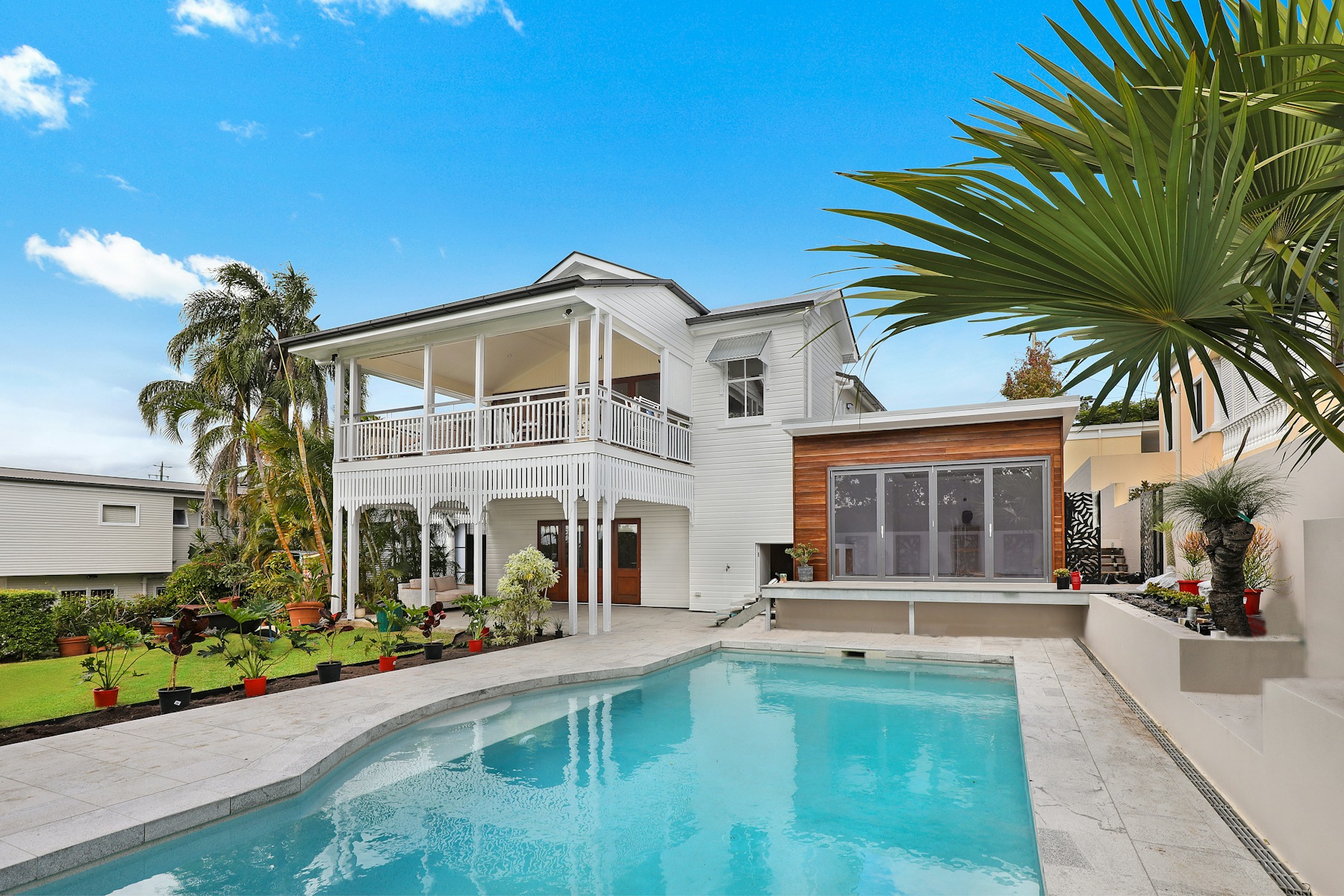
Luxury residential assets in the Memorial corridor continue to attract significant out-of-state capital.

Regulatory Climate and Bottom-Line Profitability

Navigating Harris County’s regulatory and tax landscape is an essential component of investment success. With shifting property tax policies and evolving municipal zoning, the "effective tax rate" must be factored into every pro-forma.

While Texas does not have a state income tax, property taxes remain the primary lever for municipal funding. In 2026, we expect to see continued scrutiny on appraisal districts and tax rate adjustments. Investors should remain proactive in property tax protests, a service we frequently assist our clients with to preserve margins. Furthermore, municipal zoning adjustments are increasing the density in established areas, which presents opportunities for investors to re-zone properties for higher-density residential use.

Staying ahead of these regulatory changes requires a sophisticated approach to asset management. Bottom-line profitability is not just about rent growth. It is about mitigating tax liabilities and operating costs through savvy, informed ownership. If you are questioning how your current portfolio stands up against the backdrop of changing local policy, reviewing a pricing strategy in a cooling market can provide necessary perspective on valuation adjustments.

Defensive Asset Allocation for 2026

As we look toward the close of 2026, the transition into a new economic cycle necessitates a rebalancing of portfolios. The "growth at all costs" mentality of the early 2020s must be replaced by a more disciplined approach to defensive asset allocation.

For many of our clients, this means increasing liquidity or pivoting toward assets with long-term, inflation-protected cash flows. We are currently helping our clients navigate the "flight to quality," where the focus shifts toward assets that demonstrate lower volatility and consistent demand. In practice, this means:

  1. Portfolio Rebalancing: Shifting exposure from speculative developments to stabilized, income-generating assets in Houston’s top inner loop neighborhoods.
  2. Liquidity Management: Holding reserves to capitalize on opportunities when market dislocations occur, a common feature of late-cycle transitions.
  3. Operational Alpha: Focusing on properties where management efficiency can drive NOI growth, regardless of broader market conditions.
Key Takeaway
The Houston market is resilient, but it is not immune to the cooling effects of a transitionary economy. By maintaining a focus on structural demand drivers, such as job growth, infrastructure connectivity, and population migration, you can position your portfolio to weather the cycle while capturing long-term appreciation.

The Houston market is resilient, but it is not immune to the cooling effects of a transitionary economy. By maintaining a focus on structural demand drivers, you can position your portfolio to weather the cycle while capturing long-term appreciation.

Ready to talk strategy? Book your free consultation or get your instant home valuation.

By Nick Chambers, Broker Associate, Chambers Properties Group · Realty of America

Have a question about this?

Nick answers these himself, usually the same day. No obligation, and nothing is sold to you.

A request, not an agreement. Email only; no marketing unless you ask for it.

Have a Question?

Talk to Nick directly.

Every article is grounded in real Houston market data. A 20-minute call with Nick gives you the same analysis, tailored to your situation.