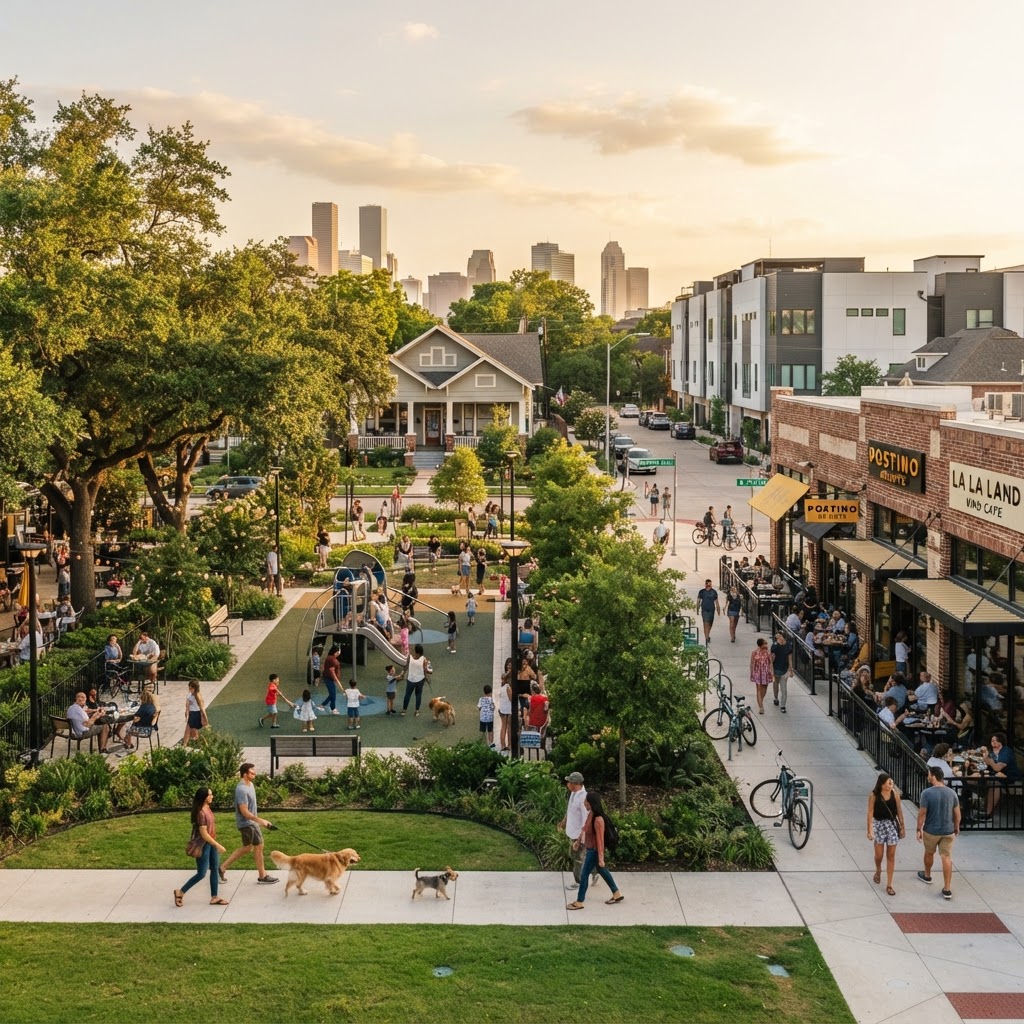
The skyline of Houston is no longer just a collection of corporate glass towers. For the discerning buyer, the true narrative of this city is written on the street level. We have moved past the era where a simple zip code defined the quality of an investment or the lifestyle of a resident. Today, the Houston real estate market is defined by the micro-neighborhood, a localized ecosystem where proximity to specific cultural anchors and infrastructure upgrades dictates value more precisely than broad municipal borders ever could.
For those navigating the current landscape, relying on macro-level statistics often leads to missed opportunities. While the broader Houston market reflects a city in transition, the most significant wealth creation is happening in pockets that the general market has yet to fully calibrate. As we look at the landscape of 2026 and beyond, it is clear that the traditional boundaries of areas like West University Place or The Heights are fracturing into smaller, hyper-specialized enclaves. Understanding these shifts is the difference between a standard transaction and a strategic asset acquisition. You can Explore Houston neighborhoods to see how these dynamics are currently playing out in your preferred area.
The Evolution of Houston's Geographic Identity
The concept of a neighborhood has historically been anchored by large, administrative districts. However, the post 2026 urban expansion in Houston has shifted toward hyper local lifestyle nodes. These micro neighborhoods are defined by a walkability index that prioritizes daily conveniences, independent retail, and localized green space over the sprawling suburban models of the past. Residents are now seeking the convenience of a twenty minute commute, not necessarily to a traditional office hub, but to a series of community centers that provide a blend of work, wellness, and recreation.
This shift is particularly evident in areas surrounding the urban core. For instance, while Montrose remains a widely recognized name, the specific blocks adjacent to newly revitalized park corridors are experiencing a distinct tier of appreciation that separates them from the rest of the neighborhood. This is not merely about geography. It is about the emergence of a specific type of social infrastructure that residents prioritize. When choosing a property, the focus has shifted from the neighborhood brand to the specific block character. Whether it is a quiet, tree lined street that serves as a pocket of tranquility or a rapidly developing corridor with high demand for local services, these micro nodes are the new vanguard of property value. By evaluating these segments through the lens of individual lifestyle needs, investors can identify potential long before the broader market recognizes the shift.
The Infrastructure Catalyst and Urban Mobility
Infrastructure development serves as the heartbeat of property value appreciation in Houston. The latest METRONext updates and the expansion of inner city transit corridors have fundamentally altered the desirability of previously overlooked residential enclaves. When we analyze real estate data, we see a clear correlation between the rollout of these transit improvements and the stabilization of property values in adjacent blocks. A home situated within a ten minute walk of a newly activated transit node or a revitalized hike and bike trail now commands a premium that was not present even five years ago.
Furthermore, the proliferation of pocket parks and small scale urban green spaces has become a primary driver of desirability. In areas like Bellaire or parts of the inner loop, the presence of a well maintained public green space within a two block radius can increase property value by as much as 8 to 12 percent compared to similar properties located just a quarter mile further away. These infrastructure catalysts act as permanent stabilizers for the local market. They turn previously dormant residential pockets into active lifestyle hubs. For the long term owner, these improvements represent a hedge against market volatility. By monitoring the city master plan and aligning your search with upcoming infrastructure projects, you position yourself to capture appreciation as these areas transition from quiet enclaves to sought after lifestyle destinations.
Data Driven Micro Market Analysis
At Realty Of America, our approach to market analysis is rooted in proprietary valuation models that go far beyond the standard Multiple Listing Service data. In the current 2026 market, we are seeing a median price of approximately 875,000 dollars for premier inner loop residential properties. However, the days on market metric reveals a stark disparity. While the broad average sits at 42 days, the most desirable micro neighborhoods are seeing properties move in 18 to 22 days. This discrepancy indicates a high level of competition for specific, well positioned inventory.
Inventory levels remain tight, hovering around 2.8 months of supply in the most requested pockets. This creates a supply demand imbalance that favors sellers but provides strategic advantages to buyers who come prepared with deep, block by block intelligence. When we analyze these trends, we are looking for the point of inflection where demand begins to outpace local supply. We track price per square foot trends on a street by street basis, identifying where the delta between the current valuation and the potential replacement cost is greatest. This data driven process allows us to strip away the noise of the broader market and focus on assets that have the highest potential for consistent performance. By understanding these granular metrics, you can make informed decisions that align with your long term financial objectives. If you are ready to dive deeper into these metrics, you can Start your home search today.
Cultural Anchors and Value Retention
The reliance on school district boundaries as the sole primary driver of property value is declining in favor of a more balanced equation that includes proximity to independent businesses and community hubs. In neighborhoods like River Oaks and the surrounding Memorial area, the value is increasingly tied to the ease of access to high quality, independent dining, wellness centers, and specialized boutique services. Residents are prioritizing their immediate environment, seeking out enclaves that offer a distinct personality and a sense of belonging that cannot be manufactured by larger, cookie cutter developments.
This is a movement toward hyper local self sufficiency. A micro neighborhood that contains a thriving coffee shop, a curated grocery option, or a local fitness studio is essentially building a buffer against market downturns. These cultural anchors create a captive audience of residents who are invested in the area for the long term. This stability reduces turnover and contributes to higher property value retention. When we consult with clients, we spend significant time evaluating these intangible assets. We look for the presence of local business owners who have a long term stake in the community and a commitment to maintaining the unique character of the area. These cultural markers are the bedrock of a resilient investment and are often the factors that drive neighborhood identity for decades to come.
Future Proofing Your Investment in the Infill Renaissance
The concept of an infill renaissance refers to the intelligent redevelopment of established urban spaces to better suit contemporary residential needs. In Houston, this is the most effective strategy for identifying growth potential before it reaches the mass market. The key to future proofing your investment is to find areas that are undergoing a shift in density and utility without losing their original aesthetic charm. These areas often experience a phase of transition where the demand for modern living spaces outpaces the supply of current housing stock, leading to significant appreciation as infill projects are completed.
To execute this strategy, one must look for indicators of reinvestment. Are there active building permits for single family luxury infill? Is there an uptick in home renovations and exterior improvements? When the property owners themselves begin to invest heavily in their own assets, it is a leading indicator that the neighborhood is on an upward trajectory. This is the optimal window to acquire an asset. By securing a property during the early stages of this renaissance, you position yourself to capture the value uplift as the micro neighborhood matures. Our consultative approach is designed to spot these early warning signs of revitalization, allowing you to stay ahead of the curve and capitalize on the long term evolution of the Houston market.
The Nick Chambers Consultative Approach
The process of securing an asset in the current Houston market requires more than just a real estate license. It requires a deep, consultative relationship that emphasizes block by block intelligence and strategic positioning. At Realty Of America, we function as advisors first and brokers second. Our role is to provide you with the transparency and the analytical framework necessary to make decisions that align with your personal financial roadmap. Whether you are looking for a primary residence that offers the potential for long term equity growth or a strategic real estate investment, our goal is to eliminate uncertainty.
We utilize our proprietary, deep dive intelligence to evaluate not just the home, but the micro ecosystem surrounding it. We examine municipal zoning trends, planned infrastructure improvements, and historical appreciation patterns for the specific blocks you are considering. This meticulous process ensures that you are not just buying a property, but acquiring a strategic asset that fits your specific needs. The Houston market is complex, but it is also full of opportunity for those who possess the right data and the right advisor. When you work with us, you are gaining access to a perspective that is intentionally designed to secure your position in the market, no matter how the broader trends shift.
Ready to talk strategy? Book your free consultation or get your instant home valuation.
Listen on the Go
The Chambers Review Podcast
This week: The Resurgence of Adaptive Reuse: Transforming Houston’s Aging Industrial Corridors into High-End Residential Enclaves
As Houston’s inner-loop land values reach historic highs, developers and sophisticated investors are pivoting from demolition to design,...
Listen to the Latest EpisodeExplore Houston Neighborhoods
Find your perfect neighborhood
By Nick Chambers, Broker Associate, Nick Chambers, Broker Associate, Realty Of America (ROA) · Realty of America