Rethinking the 2026 Houston Fix-and-Flip Strategy
The traditional fix-and-flip model in Houston has shifted from simple cosmetic updates to a data-heavy approach focused on precision-engineered renovation. With the 2026 market characterized by tighter inventory and sustained interest in high-demand pockets, profitability is no longer about finding the cheapest home. Instead, it is about identifying assets where specific functional upgrades unlock maximum appraisal value.
For many, this shift is a necessary evolution, much like the transition toward Houston portfolio hedging strategies that emphasize long-term market resilience over short-term speculation.
Why Precision Renovation Matters
In the current climate, buyers are prioritizing homes that are move-in ready and energy-efficient. Investors who focus on functional upgrades, such as HVAC efficiency, structural integrity, and smart home integration, tend to see faster exits and higher closing prices compared to those focusing solely on interior aesthetics.
This shift requires a deeper dive into neighborhood-specific buyer personas. Investors are increasingly looking at battery-storage arbitrage to add off-grid autonomy to their residential flips, a feature that has become a major selling point in the Texas market.
Targeted Investment Zones in 2026
Rather than broad sweeping generalizations, successful flips now hinge on micro-market analysis. Understanding Houston’s infrastructure pulse allows investors to predict which pockets will see the most significant appreciation.
- The Heights: Success here is found in respecting the architectural integrity of historical builds while modernizing utility. Investors who retain the vintage aesthetic while updating the infrastructure often achieve the highest price-per-square-foot gains.
- Montrose: The demand in this area is driven by artistic, urban-focused professionals. Flips that prioritize open-concept layouts and high-end, low-maintenance materials outperform traditional, conservative renovation styles.
- West University Place: In this premium submarket, the math shifts toward lifestyle upgrades. Kitchen, primary suite, and outdoor living area enhancements that cater to luxury family living are the standard for achieving the desired ARV.
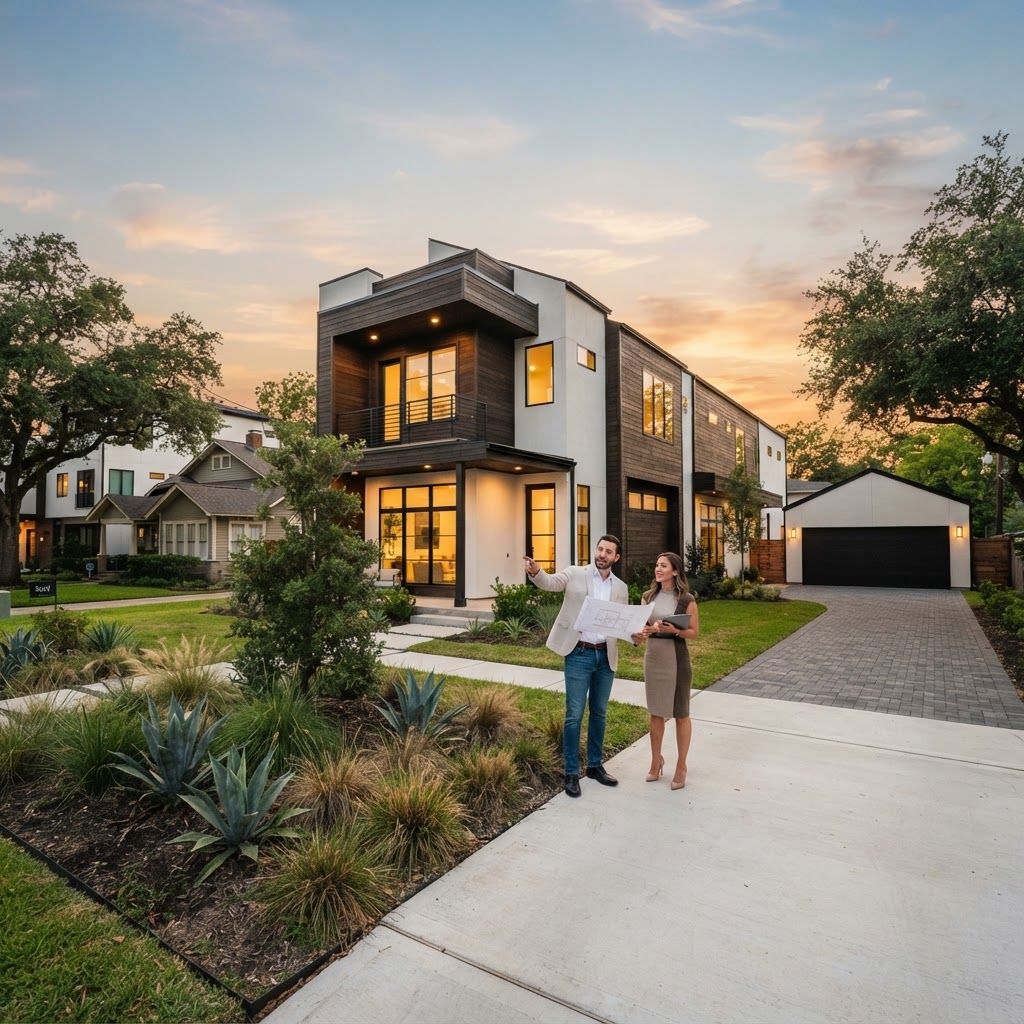
Precision renovation in high-demand zones like West University requires a focus on luxury lifestyle upgrades.
Mitigating Risk Through Data
Before purchasing a distressed property, professional investors should leverage predictive yield analysis to gauge days-on-market metrics and absorption rates. A property in a neighborhood with a rising inventory surplus carries inherent risks that no amount of cosmetic work can mitigate.
Savvy operators are also mastering Houston’s off-market market to find distressed assets before they hit the MLS. This allows for a more favorable cost basis, which is essential when a pricing strategy in a cooling market becomes necessary.
Profitability is no longer about finding the cheapest home, but rather identifying assets where specific functional upgrades unlock maximum appraisal value.
Investors must treat their renovation budget as a calculated capital expenditure aimed at immediate equity capture. This ensures the ARV remains well above the total cost basis, inclusive of holding costs and financing fees. For those looking to scale, exploring the fractional ownership boom may offer a way to spread risk across multiple fix-and-flip projects simultaneously.
Data-driven investment strategies are reshaping the skyline and the residential corridors of Houston.
As the market continues to evolve, the most successful investors will be those who balance high-quality construction with the insights found in Houston industrial resilience reports and other macroeconomic indicators.
***
Nick Chambers
Broker Associate at Chambers Properties Group
The Chambers Review