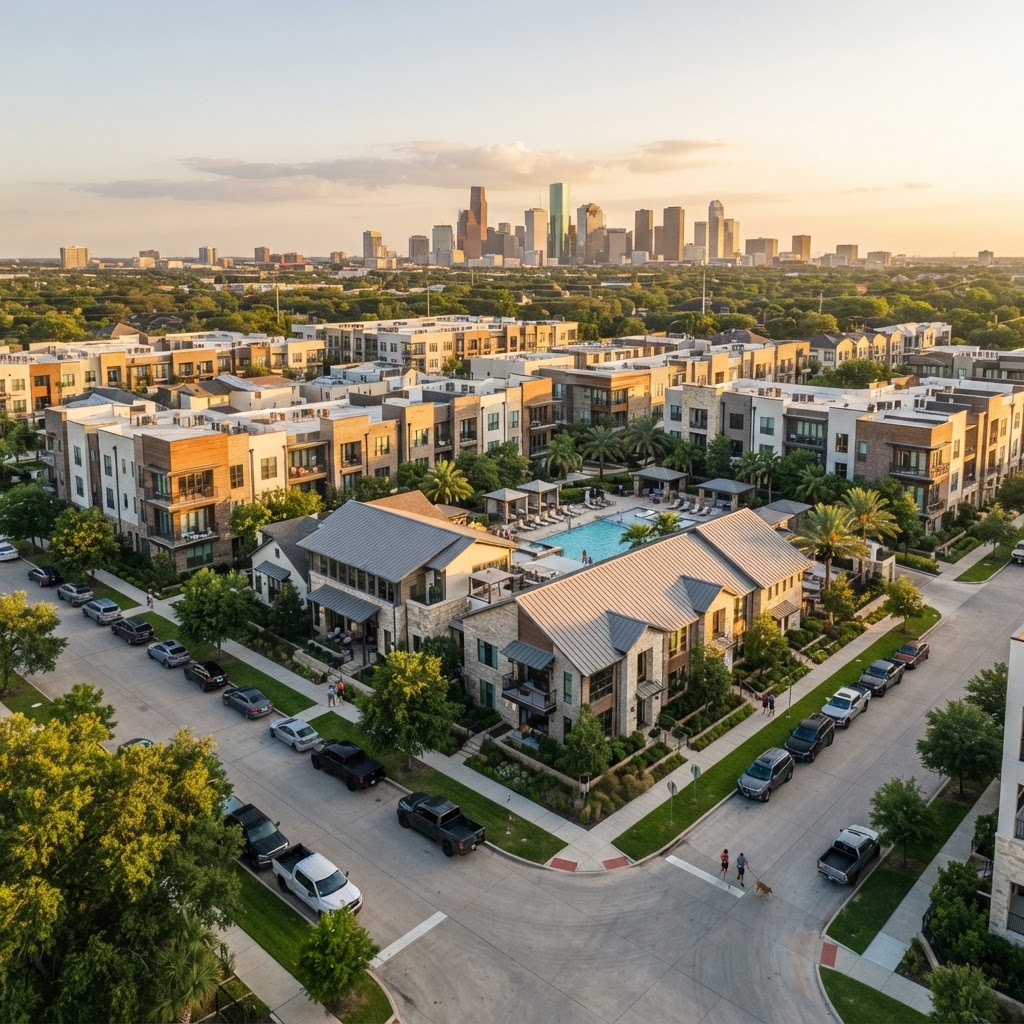
As the Houston skyline continues to evolve, the local real estate landscape in Q4 2026 reflects a profound shift in how professional investors approach residential asset classes. While the allure of traditional single family home flipping remains for some, the institutional and mid tier investment community has pivoted toward a more scalable, reliable vehicle. Build to Rent (BTR) communities are no longer an experimental asset class in Harris County. They have become the backbone of modern portfolio diversification strategies, offering a hedge against market volatility while capitalizing on the specific housing preferences of a growing, diverse professional workforce.
The Houston market in late 2026 is defined by a nuanced balance of supply and demand. With a median home price hovering near $385,000 across the metro area and an average days on market metric sitting at 42 days, the velocity of sales has stabilized. Inventory levels remain tight in core areas like West University Place and The Heights, pushing investors to look further afield to emerging exurbs. This transition is not merely about finding land, but about understanding the logistical and demographic currents that make Houston the premier BTR market in the United States. Whether you are looking to Explore Houston neighborhoods or See Houston investor FAQs, the current data suggests that BTR is the strategic play for Q4 2026 and beyond.
The Evolution of Houston Build to Rent
The BTR model has matured from a niche development strategy into the preferred vehicle for institutional capital. In previous years, investors were hesitant to commit to the management intensity of large scale rental subdivisions. By Q4 2026, those operational hurdles have been resolved through professionalized property management and standardized construction models. The shift is most visible in the aggressive land acquisition occurring in rapidly expanding corridors such as Conroe and Katy.
Investors are finding that these emerging exurbs offer the requisite acreage for 50 to 200 unit communities that cater to households wanting the space of a detached home without the burden of a mortgage. By focusing on these areas, developers are capturing the overflow from central hubs like Memorial and River Oaks, where land scarcity and price points have effectively priced out the average middle income renter. The BTR model effectively bridges this gap by providing high quality new construction assets that offer the amenities of a luxury apartment complex with the privacy and square footage of a suburban house.
For the savvy investor, the goal is to secure land tracts that are positioned ahead of major infrastructure projects. As the Houston metro area continues to sprawl, the ability to identify growth trajectories in the northern and western corridors is the primary driver of alpha. This is not about chasing the highest rent; it is about securing a long term yield that benefits from consistent demand, lower maintenance costs inherent in new builds, and the ability to control an entire community ecosystem.
Zoning and Infrastructure in the Houston Regulatory Environment
Houston remains unique among major American cities due to its absence of traditional zoning. While this provides unparalleled flexibility for developers, it also places a significant burden of due diligence on the investor. In Q4 2026, the feasibility of a BTR project depends heavily on navigating the city's specific regulatory framework, particularly concerning detention requirements and utility connectivity.
Recent infrastructure expansions have acted as catalysts for new BTR developments. The extension of major thoroughfares and the ongoing development of grand parkways have opened up previously inaccessible parcels of land. Investors must analyze how these transit corridors impact the long term feasibility of their projects. A BTR site that is perfectly positioned today may lose its competitive advantage if it is not situated within a reasonable commuting distance to major employment hubs.
The technical requirement for successful development includes a deep understanding of site drainage and municipal utility capacity. Because Houston is prone to heavy precipitation, the investment in high quality storm water management is not a luxury, but a fundamental requirement for the durability of the asset. When assessing land for potential BTR projects, our advisory practice emphasizes the importance of thorough environmental and civil engineering reviews. Developers who neglect these details often find their margins eroded by unexpected remediation costs or permitting delays. By aligning projects with the city's long term infrastructure master plan, investors can ensure that their BTR assets remain attractive to both residents and potential institutional buyers for decades to come.
Demographic Shifts and Demand Drivers
The Houston economy in Q4 2026 is fueled by a resilient mix of energy, healthcare, and technology sectors. This economic diversity has created a steady stream of professional talent moving into the city. Unlike previous market cycles, this incoming workforce is characterized by a high preference for flexibility. Many of these professionals are choosing the rental lifestyle for reasons that go beyond simple financial constraints.
Remote work sustainability is a primary driver. Even as some companies return to the office, the hybrid work model is firmly entrenched. This has increased the demand for properties that feature dedicated office space, high speed internet infrastructure, and proximity to green space. Large scale rental subdivisions in areas surrounding Montrose and the inner loop provide the urban feel, but for those who require more room for a home office, the outer ring BTR communities in suburban Houston are the clear winners.
These demographic shifts are also impacting the way investors market their properties. It is no longer sufficient to provide four walls and a roof. Today's professional renter expects integrated smart home technology, energy efficiency, and community amenities such as dog parks, co working spaces, and outdoor fitness areas. These features are not just perks; they are essential tools for maintaining low vacancy rates and attracting high quality tenants who will treat the property with care. The demographic data confirms that the segment of the population looking for high end, single family rental living is growing, and that this group is willing to pay a premium for a professionally managed environment.
Construction Cost Management and Profit Margins
Navigating the late 2026 labor market and material supply chain is perhaps the most challenging aspect of the BTR cycle. After several years of significant volatility, costs have begun to stabilize, but they remain at historical highs. Maintaining healthy profit margins requires a rigorous approach to construction management.
Investors are increasingly utilizing standardized floor plans to leverage economies of scale. By utilizing modular components or repetitive design templates across an entire subdivision, developers can significantly reduce the time on site and minimize waste. This approach also simplifies the procurement process for building materials, allowing for bulk orders that hedge against potential supply chain disruptions.
Labor is another critical factor. The competition for skilled trades in the Houston region is intense, and the developers who are most successful are those who have established long term relationships with their contractors. Rather than seeking the lowest bidder for every project, the most profitable developers focus on speed, quality, and reliability. This reduces the risk of project slippage, which is the quickest way to destroy the internal rate of return. During this phase, it is also essential to account for carrying costs, as interest rates remain a significant component of the overall project budget. A well managed BTR project in 2026 should account for these variables with a buffer, ensuring that even if timelines extend by a few months, the core project economics remain robust.
Property Management and Operational Excellence
The true value of a BTR investment is realized during the operational phase. In Q4 2026, the management of these assets has shifted toward a centralized model that leverages technology to optimize Net Operating Income (NOI). The days of fragmented, property by property management are over. Modern BTR owners are using sophisticated software suites that handle everything from automated rent collection to smart home system monitoring.
Smart home technology is now a standard requirement for competitiveness. Keyless entry, automated thermostat controls, and leak detection sensors provide value to the tenant and security to the owner. These systems also allow for remote troubleshooting, which reduces the need for costly site visits and emergency repair calls. By integrating these systems into a centralized dashboard, property managers can track the performance of an entire portfolio in real time.
Centralized leasing models also allow for more efficient marketing. When a subdivision is managed as a single brand, the marketing effort becomes more targeted and cost effective. Potential tenants can view virtual tours, check availability, and sign leases online, which significantly reduces the administrative burden and shortens the vacancy period. For the long term holder, this efficiency is key to maintaining a high Net Operating Income. By reducing tenant turnover through high quality service and a well maintained community environment, investors ensure a consistent cash flow that is the foundation of any successful real estate strategy.
Exit Strategies and Institutional Sales
As we look toward the close of 2026, the exit strategy for BTR assets has become as important as the acquisition strategy. Historically, many investors planned to hold these assets indefinitely for cash flow. However, a significant trend has emerged involving the bundling of finished BTR portfolios for sale to REITs and other institutional buyers.
Institutional investors are eager to acquire stabilized, cash flowing portfolios of single family homes in high growth markets like Houston. They value the scale, the institutional grade property management, and the lack of deferred maintenance that comes with a newly built community. For the original developer, this offers an opportunity to realize significant capital gains, providing liquidity to move into the next phase of development.
However, the choice between holding and selling depends entirely on the investor's specific goals. If the primary objective is long term wealth preservation and consistent income, holding the asset remains an excellent strategy. The tax advantages, including depreciation, are significant. If the goal is to recycle capital into new projects, bundling and selling to an institutional buyer is often the most efficient path. We advise our clients to evaluate their exit options during the initial planning phase of the project, as the design and management systems must be compatible with institutional requirements if a sale is the intended outcome. Regardless of the strategy, the Houston BTR market remains one of the most promising sectors for investors looking to build scalable, resilient portfolios.
Ready to talk strategy? Book your free consultation or get your instant home valuation.
Listen on the Go
The Chambers Review Podcast
This week: The Micro-Apartment Shift: Why Houston Investors Are Converting Underutilized Office Space into High-Yield Urban Rentals
Explore how Houston investors are successfully converting underutilized office space into high-yield micro-apartments. Learn the strategy...
Listen to the Latest EpisodeReady to Invest Smart?
Book an investor strategy call
By Nick Chambers, Broker Associate, Nick Chambers, Broker Associate, Realty Of America (ROA) · Realty of America